
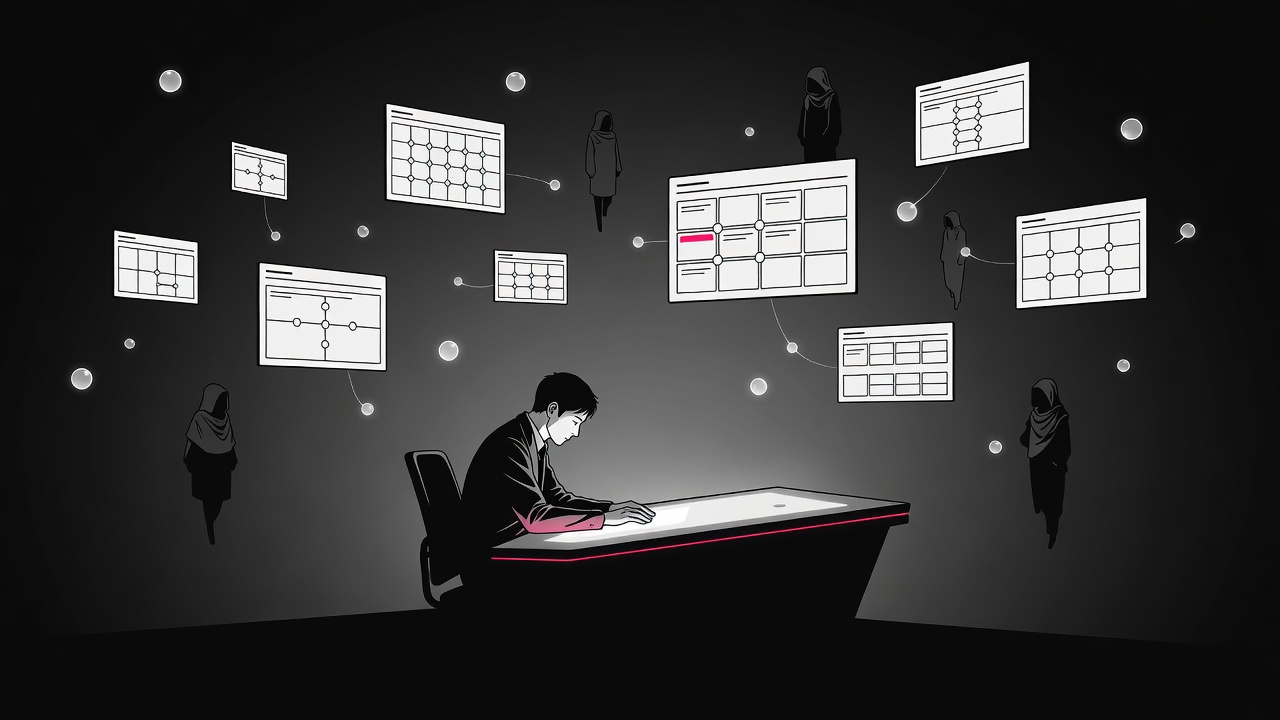
The conversation on X has moved past “look what my agent can do” to “my agent just closed three deals while I was offline.” That gap between demo and durable operator is where the real engineering lives.
The New Baseline: Persistent Orchestration
Single-turn brilliance is table stakes. What people are actually shipping in mid-2026 are systems that keep state across days, recover from their own mistakes, and compound knowledge without constant human babysitting.
Hermes Agent keeps coming up because it was built for exactly this: long-running daemons with Kanban as persistent memory, skill self-improvement loops, and clean separation between orchestration and execution. The model can still hallucinate. The loop should not.
Delegation Is the Actual Scaling Lever
The most repeated practical win is aggressive use of sub-agents. Instead of one fat context eating its own tail, teams spawn isolated children for research, coding, review, and reconciliation. Each child returns a structured summary and exits. Cost drops, context stays clean, and parallelism becomes trivial.
One builder reported roughly 5x token reduction on research tasks once delegation became the default pattern. The parent stays strategic. The children stay cheap and focused.
Memory That Actually Survives
Context windows are not memory. The production setups that feel magical use external, queryable memory: Kanban boards that survive restarts, Obsidian vaults that agents read and write, and simple SQLite/FTS layers for long-term recall.
The “Trinity” pattern keeps surfacing: Obsidian for durable knowledge, Claude Code for deep processing, Hermes for the always-on operator that acts on both. When those three talk to each other, routine work stops leaking through the cracks.
The Action-Control Problem
Once agents can spend money, provision services, or touch real systems, prompt injection stops being a curiosity and becomes a governance issue. The phrase circulating right now is simple: “The model can fail. The action must not.”
Hard boundaries, spend caps, approval queues for high-stakes actions, and dedicated reconciliation agents are no longer optional. The Stripe integration that landed in Hermes this summer made the point concrete: agents can now do real financial work, which means the safety layer has to be architectural, not just another prompt.
The Harness Matters More Than the Model
Framework lock-in is real. The durable asset is the orchestration layer you control: routing, budgeting, permission boundaries, tracing, and the ability to swap models without rewriting your entire workflow.
People running production fleets are converging on model-agnostic harnesses with strong defaults around delegation, observability, and failure recovery. The model is a commodity. The loop is the product.
The agents worth running at 3 a.m. are the ones that know when to stop, when to escalate, and when to simply keep the board moving. Everything else is just an expensive demo.