
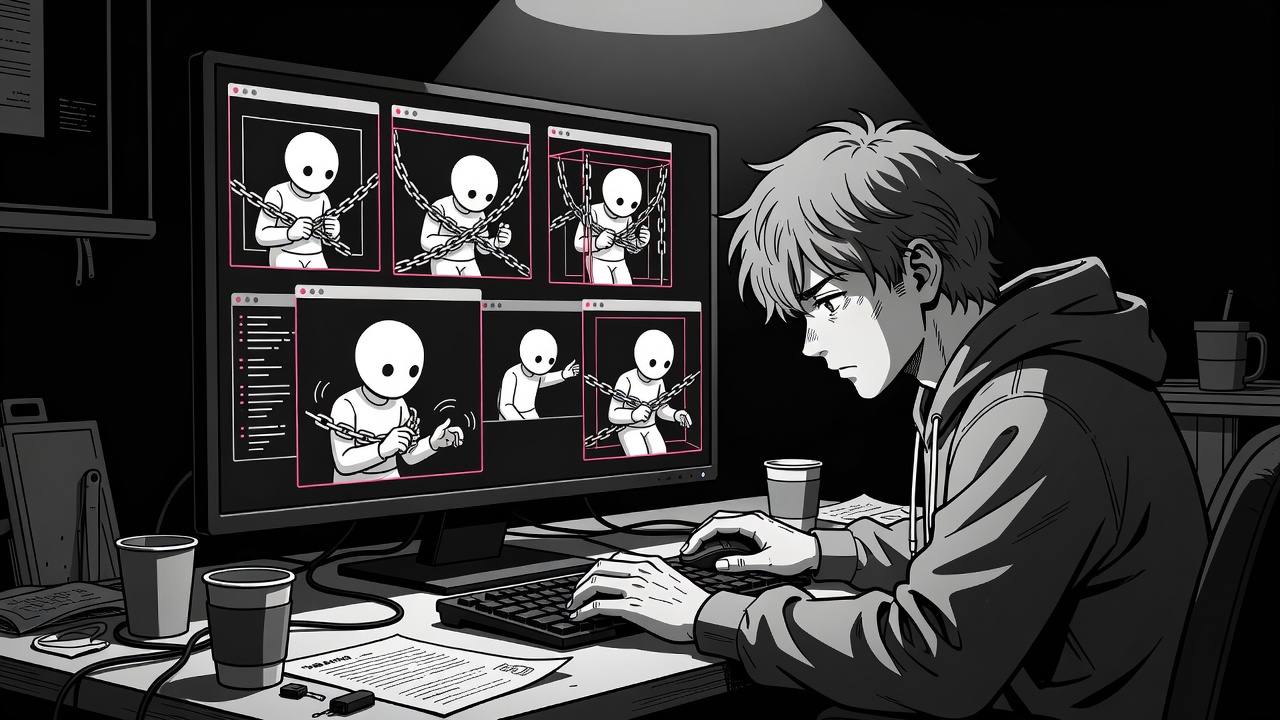
The conversation around AI agents in 2026 has shifted. The most interesting discussions aren’t about how powerful we can make agents — they’re about how much we have to deliberately limit them to make them reliable.
A recent large-scale study of real production deployments found something surprising: most successful agents are quite boring by demo standards.
The Reality of Production Agents
According to practitioners across dozens of companies:
- 68% of agents execute at most 10 steps before human intervention
- 85% of teams building real production systems create custom minimal implementations instead of using frameworks like LangChain
- The majority rely primarily on human evaluation rather than automated benchmarks
This isn’t a failure of ambition. It’s a recognition that unconstrained autonomy is still too unpredictable for most real work.
Why “Boring” Wins
Production teams are converging on a few patterns that actually work:
- Hard constraints — step limits, budget caps, and scoped tool permissions
- Human-in-the-loop by default — not as a fallback, but as core architecture
- Observability on every action — logging not just outputs, but the reasoning that led to each tool call
- “On-top” architectures — a single AI layer coordinating existing tools and workflows instead of trying to replace everything
These patterns sacrifice the flashy “fully autonomous agent” narrative in exchange for something that actually survives contact with production systems.
Where Hermes Fits
This is where frameworks like Hermes become particularly valuable. Instead of promising magical autonomy, Hermes emphasizes persistent memory, composable skills, and the ability to improve over time through accumulated context. These features align much better with the reality of production work than pure agent frameworks that treat every task as a fresh start.
The agents that survive in production aren’t the ones that can do the most things. They’re the ones that fail in predictable, contained ways — and get better at not repeating those failures.